
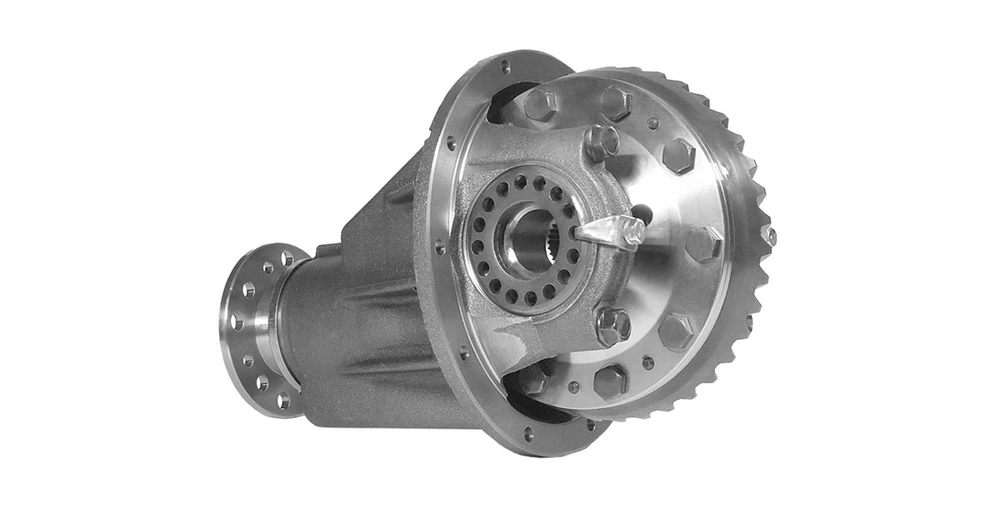
Toyota Differential Identification Guide | LCE Performance
Posted by Bryan Young on Dec 30th 2024
Why It Matters to Know What Differential You Have
Many customers call our tech line with questions about their Toyota — gear sets, lockers, axle shafts, rebuild kits — without knowing exactly what configuration their truck has from the factory. This is the article that answers that question. It is a complete identification reference for every factory Toyota differential used in North American trucks, 4Runners, T100s, Tundras, FJ Cruisers, and Land Cruisers from 1979 to present, including the axle codes, gear ratios, swap compatibility, and what aftermarket parts will and will not fit.
Read it from the top if you are new to Toyota differentials. Skip to the section that matches your vehicle if you already know what you are looking at. The product callouts throughout point to the LC Engineering parts that fit each differential family — ring and pinion sets, set-up kits, lockers, axles, and the rest.
LC Engineering Pro Tip: The single most common mistake we see is people ordering gears or a locker based on what their truck "should" have from the factory, without verifying. Trucks get rebuilt, axles get swapped, gear ratios get changed. Before you order anything, check the axle code AND verify the gear ratio with the spin-and-count method below. Five minutes of verification saves a $400 return.
Looking for differential parts for your Toyota? LC Engineering stocks ring and pinion sets, lockers, differential set-up kits, HD CV axles, and complete drivetrain components for every factory Toyota differential covered in this article.
Toyota 4x4 History and Terminology (North America)
A quick reference for the chassis platforms covered in this guide:
- '79–85 pickups and 4Runners had front live-axle, leaf-spring suspensions.
- '86–95 4Runners, '86–95.5 mini-trucks, and '93–98 T100s have torsion bar Independent Front Suspensions (IFS).
- '96-up 4Runners, '95.5-up Tacomas, and 2000-up Tundras, Sequoias, and FJ Cruisers have coil-sprung IFS.
- "First generation" 4Runners are '84–89, 2nd gen are '90–95, 3rd gen are '96–03, and 4th gen are '03-up.
- "Mini-trucks" are Toyota pickups prior to the '95.5 model year change to the "Tacoma."
- The "mini-trucks" are also known as the "Hilux" in other parts of the world.
How to Identify Your Differential and Gear Ratio
Three methods, from easiest to most reliable. Use whichever matches what you have access to.
Method 1: Read the Axle Code from the VIN Plate
If you think your axle gearing has not been changed since it left the factory, you can read and decipher the "axle code" from your vehicle information plate (VIN). This is the fastest method but only valid if the truck still has its original differential. See the Tacoma axle code reference at the bottom of this article for decoding.
Method 2: Count Teeth (Differential Removed)
If your differential is out of the vehicle, you can divide the number of teeth on the ring gear by the number of teeth on the pinion gear to come up with the gear ratio. For example, 41/10 gives you a 4.10:1 gear ratio (the most common stock ratio).
Method 3: The "Spin and Count" Method (Best for Verification)
To verify gear ratios with the diffs still on the vehicle:
Open Differentials: Block the tires at one end of the vehicle to keep it from rolling, then jack up a tire on the other end. Place the transmission in neutral and release the parking brake if you are checking the rear diff. Spin the tire exactly TWO full revolutions while at the same time counting exactly how many revolutions the driveshaft spins (marking the driveshaft and tires beforehand will make it easier to count revolutions). The number of revolutions the driveshaft spins is your gear ratio. If it spins just over 4 times, then the ratio is probably 4.10; 4-1/3 = 4.30; 4-1/2 = 4.56; just under 5 = 4.88; 5-1/3 = 5.29, and so on.
Limited Slip (LSD or "Posi") and Locking Differentials: With these types of diffs, you won't be able to turn one tire without the tire on the opposite side of the axle turning with it. In this case, follow the directions above except raise BOTH tires off the ground and turn them exactly ONE full revolution while counting driveshaft revolutions. Again, the number of driveshaft revolutions is your gear ratio.
Toyota Axle Widths
All widths are measured WMS to WMS (wheel mounting surface to wheel mounting surface):
- '79–85 front axle: ~55.5", rear axle: 55"
- '86–95 front IFS: ~59", rear axle: 58.5"
- Tacoma 4x4 rear axle: 60"
- T100 front IFS: ~65", rear axle: ~66.75"
- '90–97 Land Cruiser FJ-80/FZJ-80 front axle: 63.5"
Note: 2WD 4Runners, Tacoma PreRunners, T100s, and Tundras use 6-lug wheels — same as the 4x4s (the other 2WDs use 5-lug).
Front Differentials
4cyl 8" Differential ('79–85 Trucks and 4Runners)
The '79–85 Trucks and 4Runners all have 4-cylinder engines and use what most call the 4cyl 8" diff in the front (the same one they use in the rear).
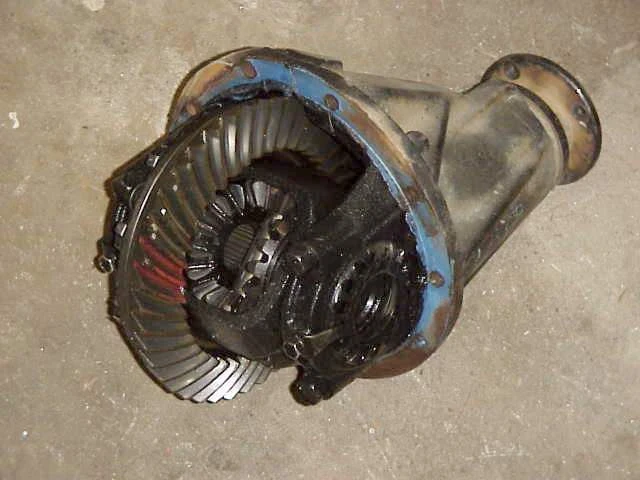
7.5" IFS Differential ('86–95 IFS Trucks and 4Runners, '93–98 T100)
'86–95 IFS trucks and 4Runners, and all '93–98 T100s, use a 7.5" front diff that is offset to the passenger's side. Later models came with ADD (Automatic Differential Disconnect) which uses a vacuum-actuated mechanism to disconnect the driver's side axle shaft from the differential.
Carriers and gear sets are interchangeable between the two different versions (and also happen to be the same as used in the 2WD Toyota pickup 7.5" diffs). One difference between ADD and non-ADD diffs is that the carrier in an ADD differential has needle bearings supporting the axle shafts at the differential. The non-ADD diffs did not have this bearing and sometimes the passenger side axle flange wears the carrier and becomes loose or wobbly, eventually causing oil leaks, noise, and possible spider gear damage. ADD and non-ADD diffs are swappable as are most of their parts. This makes it possible to change your ADD diff to non-ADD by simply swapping parts.
Key specs: passenger's side, low pinion, 27 spline axles. This diff is based on the 2WD pickup 7.5" rear diff — same internals, different housing.
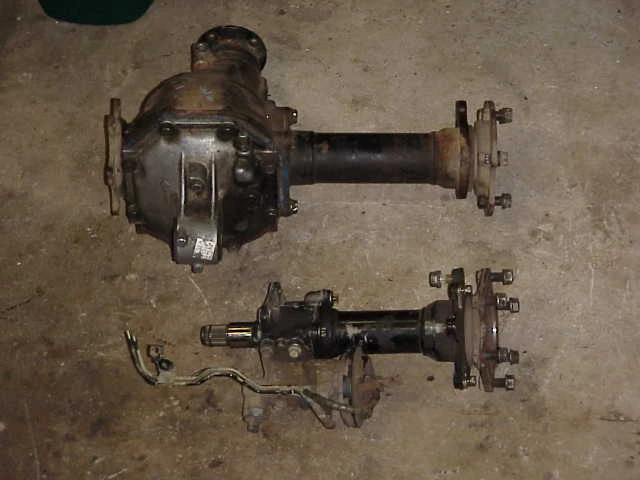
Late-Model 7.5" Differential ('95–03 Tacoma, '00–04 Tundra, '96–02 4Runner)
'95–03 Tacoma, '00–04 Tundra, and '96–02 4Runners have a high-pinion 7.5" IFS front diff offset to the driver's side. The high-pinion design is used so that the rack-and-pinion steering and anti-sway bar on these vehicles can run under the front driveshaft.
The housing is a unique bolt-together design. The carrier inside is exactly the same as the '86–95 IFS diffs, so LSDs and lockers for it are also the same. However, since this is a high-pinion diff, the gears for it are different (reverse-cut) than the earlier diff. There is an ADD and non-ADD version of this diff as well.
Key specs: driver's side, high pinion, 27 spline axles, bolt-together "clamshell" housing design.
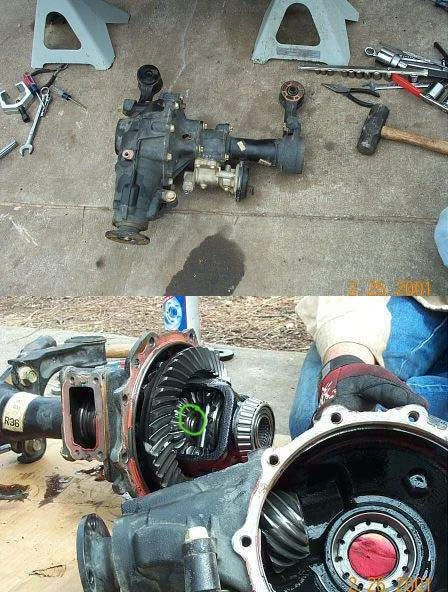
8" IFS Differential ('03+ 4Runner, '04+ Tacoma, FJ Cruiser, '05–07 Tundra)
Key specs: driver's side, mid-pinion, clamshell housing, 30 spline axles. Carrier break: 3.91 and up, 3.73 and down.
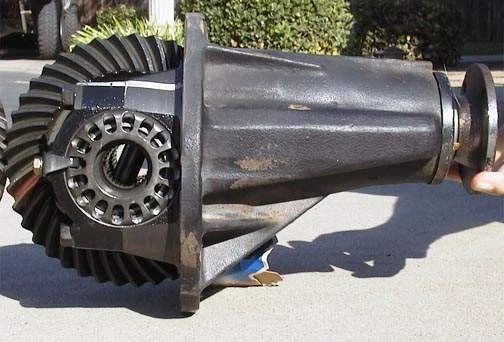
Hi-Pinion 8" Differential ('90–97 Land Cruiser FJ-80 / FZJ-80)
The '90–97 Land Cruiser (FJ-80 and FZJ-80) uses a high-pinion, reverse-cut front diff based on the V6/Turbo rear diff. The high-pinion design allows the steering on these vehicles to run behind the axle and under the driveshaft.
Carriers (lockers, LSDs) from the 8" V6/Turbo diffs can be installed (direct bolt-in) in the hi-pinion diff. The entire diff is also a direct bolt-in to all front and rear axles that use an 8" diff. This diff is desirable to some straight-axle mini-truck and 4Runner owners for two reasons. First, the reverse-cut design of the gears is stronger than simply using a rear diff and gears up front as the factory did, since it's not using the weaker "coast" side of the gears when driving forward. For this reason, this diff is generally only used in the front axle. Second, the hi-pinion design gives very good ground clearance for the pinion and driveshaft as well as improves driveshaft operating angles.
In North America, almost all of these diffs came from the factory with 4.10 gears. Aftermarket gears for this diff are more expensive than most since they are either imported or custom made in limited quantities. Randy's Ring & Pinion currently offers 3.70, 4.11, 4.56, 4.88, and 5.29 ratios for the FJ-80 hi-pinion. LCE does not stock these directly — contact our tech line if you need help sourcing a specific ratio for an FJ-80 build.
Rear Differentials
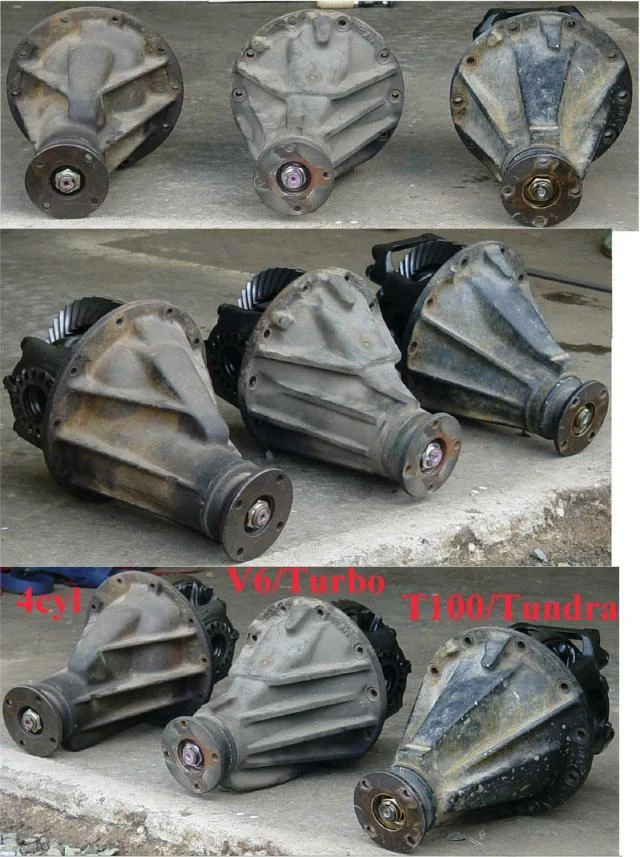
8" Diff Housing (3rd Member) Identification
The 4cyl diff has 3 ribs on each side. The V6/Turbo diff has 4 ribs on each side and the trapezoid-shaped top rib. The T100/Tundra/Tacoma diff has the characteristic bearing truss.
Note: Starting around '96, the V6 diffs started using a casting that looks nearly the same as the T100/Tundra casting from the outside. However, it doesn't have the trussed bearing cap on the inside, and the outside uses the smaller 8mm mounting studs.
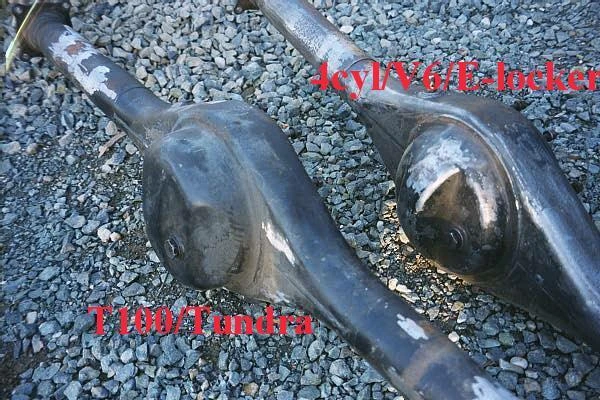
Axle Housing Identification
The 4cyl/V6/E-locker has a dome-shaped cover. Diff uses 8mm studs with 12mm nuts. The T100/Tundra/non-TRD Tacoma has a deeper, blocky cover to accommodate the bearing truss. That diff uses 10mm studs with 14mm nuts.
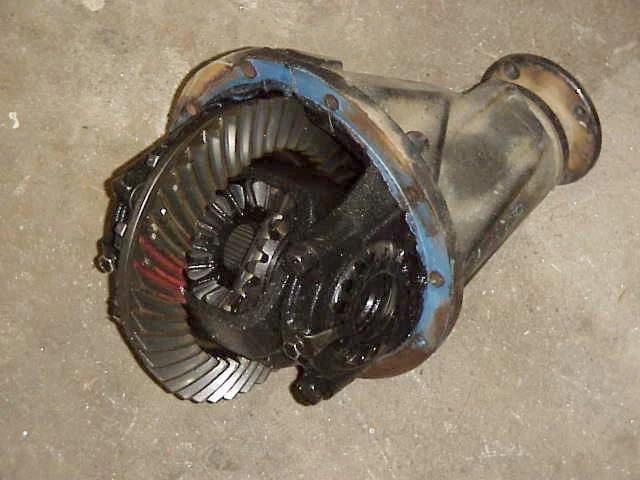
4cyl 8" Differential (Rear)
All pre-'95 4-cylinder 4WD mini-trucks and 4Runners use the Toyota 8" 2-pinion differential front and rear (except turbo models). This is known as the "4cyl diff." This diff is by far the most common diff in older Toyotas.
Key specs: ten 10mm ring gear bolts, 27 spline pinion, 2-pinion carrier (case). V6 carriers can be used in this diff if the correct bearings are used. 4cyl diffs are swappable with the V6 and high-pinion diffs.
V6/Turbo 8" Differential
'86–95 4cyl Turbo and V6 trucks and 4Runners, and ALL '96+ 4Runners, use the Toyota 8" 4-pinion differential in the rear. This diff is known as the "V6/Turbo diff."
Key specs: stronger housing than the 4cyl diff, larger carrier bearings than the 4cyl diff, 30 spline axles, 27 spline pinion (pre-'96), ten 10mm ring gear bolts, 8mm axle housing studs with 12mm nuts, 4-pinion carrier.
4cyl 8" diff carriers (cases) do not fit without custom carrier bearing adapters (try Inchworm Gear). A few pre-'96 V6 trucks and 4Runners have been found to have come with the 4cyl-style diff from the factory. Nobody knows why.
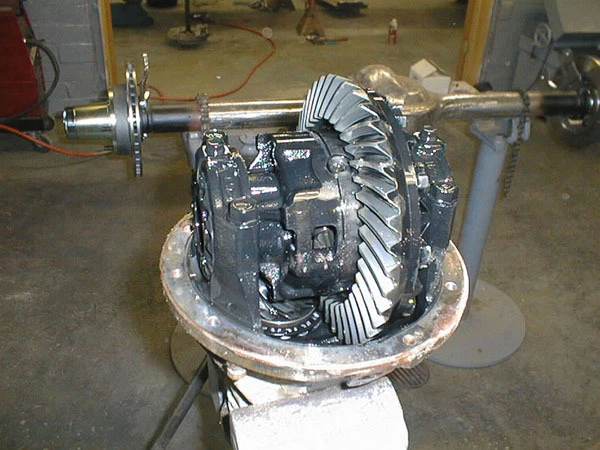
'96-Up 4Runner V6 Diffs
New improved housing that looks the same as the T100/Tundra/Tacoma diff on the outside; internals are all the same as the regular V6 diff. 30 spline pinion on OEM gears — swap pinion flange to 27 spline to use aftermarket gears.
The Factory 4.88 V6 Diff (Special)
The factory 4.88 V6 diff is unique. Axle code G144, white pinion paint code. Generally came in 92–95 trucks/4Runners with V6, auto transmission, 31" tires, and tow package.
The housing offsets the pinion towards the ring gear, allowing the ring gear to be thinner. OEM Toyota gears are the ONLY gears that fit this diff due to the thinner ring gear — all other gear sets have thicker ring gears and do not fit. The carrier (case) is the same as the V6 diffs, so normal V6 lockers, LSDs, etc. will work in this diff.
Practical note on re-gearing a G144 diff: The OEM Toyota gear sets that fit this diff are likely discontinued at this point. If you have a G144 diff and want to re-gear or run a different ratio, the recommended fix is to swap the entire differential for a standard V6 8" dropout that accepts aftermarket gears. LCE stocks direct-fit V6 8" dropout replacements in the following ratios:
- 4.11 — V6 8" Dropout 3rd Member (part 1091342)
- 4.56 — V6 8" Dropout 3rd Member (part 1091330)
- 4.88 — V6 8" Dropout 3rd Member (part 1091334)
- 5.29 — V6 8" Dropout 3rd Member (part 1091332)
Note: V6 diffs are swappable with 4cyl and high-pinion diffs.
T100/Tundra/Tacoma Diff
All 2WD and 4WD T100s, '00–06 Tundras, and Sequoias use a newer/stronger 8" 2-pinion diff. Tacoma 4x4s and Tacoma PreRunners that don't come with the electric locker (aka "non-TRD"), as well as V6 Tacoma 4x2s, also came with this diff.
This diff is commonly and mistakenly called an 8.4" or 8.25" diff, possibly to imply its extra strength. The ring gear actually measures 8". The extra strength of this diff comes from the bearing cap/truss and large diameter pinion gear shaft.
LSDs available: the TRD/Kazuma clutch-type 3-pinion LSD, the OEM 4-pinion Tundra TRD LSD, and the Detroit Trutrac. Lockers available: the Powertrax "Lock-right," "No-Slip," ARB Air Locker, Detroit Softlocker.
This diff cannot be fitted to an older-style 8" axle because it uses a larger diameter mounting bolt pattern and because more space inside the housing is necessary to accommodate the large bearing cap. The different bolt pattern also makes it very impractical to swap in an electric locking Toyota diff (the whole mounting flange would have to be re-done using a special jig).
Key specs: carrier bearing truss and newer housing adds significant strength over V6 and 4cyl diffs. Uses V6 carrier bearings, larger pinion bearings. Uses shims for backlash adjustment instead of threaded adjusters. Twelve 12mm ring gear bolts. 10mm axle housing studs with 14mm nuts. 30 spline axles, 30 spline pinion.
Note: 4Runners do NOT use this diff at all. Late-model 4Runners still use the V6 8" diff above. This diff is NOT swappable with V6, 4cyl, high-pinion, or electric locking diffs.
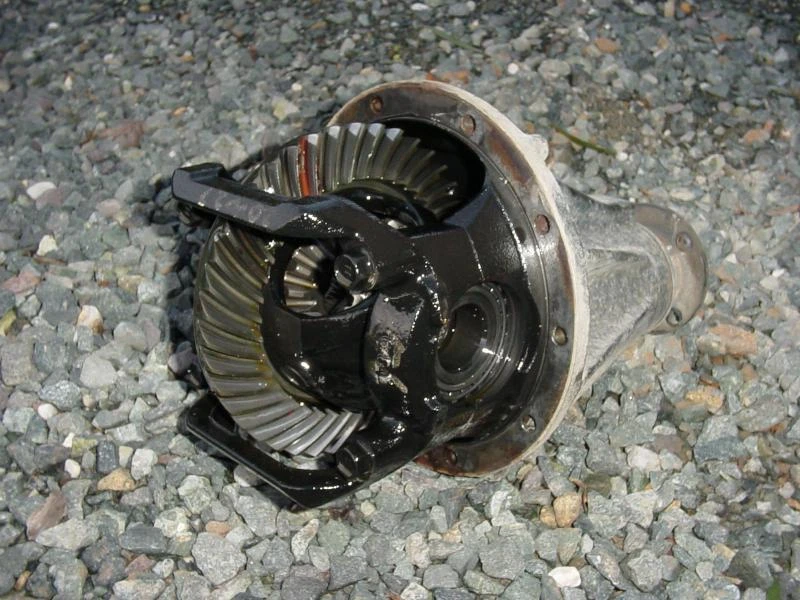
'07+ Tundra 5.7L V8, 10.5"
The massive 10.5-inch Tundra rear ring gear, comparable to a 14-bolt or Dana 70. The big axles were offered with both 4.10 and 4.30 ring and pinions. Since most are found with the tow package, the majority will be 4.30:1. The smaller 9.5-inch diff is available with 4.10 and 3.90 gears, again the lower with the tow package. We like that this low-pinion axle is not extremely low like a 14-bolt or a Ford 9-inch. This results in a higher rear driveshaft, less heat created by the gear engagement, but slightly less pinion-to-ring-gear-teeth engagement due to less hypoid drop.
Toyota Electric-Locking Differentials
Electric Locker (3rd Gen 4Runners, Tacoma 4x4s, Tacoma PreRunner 4x2s)
A factory option on 3rd Gen 4Runners, Tacoma 4x4s, and Tacoma PreRunner 4x2s is an electric locking rear differential. This diff is a 4-pinion design based on the Turbo/V6 8" diff and uses the same gear sets and bearings (except for the large bearing near the locking mechanism).
These locking diffs can be retrofitted into 8" diff axles if the axle housing is modified. It cannot be easily retrofitted into a T100/Tundra or open-diff Tacoma style axle housing because the mounting bolt pattern is smaller. It could be done by an axle builder by doing major work to the mounting flange, but that is not really a practical option.
Note: 30 spline pinion on OEM gears, swap pinion flange to 27 spline to use aftermarket gears.
Hi-Pinion Electric Locker ('93–97 Land Cruiser FZJ-80)
A factory option on '93–97 Land Cruiser FZJ-80s is a hi-pinion electric locking front differential. It can be installed into modified 8" axle housings, similar to the 4Runner/Tacoma locker mentioned above. The reverse-cut gear sets for this diff are the same as for the standard hi-pinion diff mentioned earlier.
These vehicles also had an optional 8.875" REAR electric locker. This one has been retrofitted into other Land Cruiser models with considerable effort, but it doesn't appear to be compatible with any non-Land Cruiser vehicles.
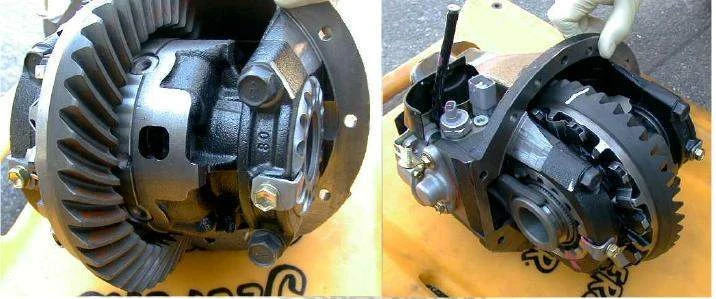
Tacoma Differential Axle Codes
First digit:
- A = 7.5" ring gear
- B = 8" ring gear
Next two digits (gear ratio):
- 01 = 3.42
- 02 = 3.58
- 03 = 4.10
- 04 = 4.56
- 05 = 3.15
- 06 = 3.91
Last digit (carrier type):
- A = 2-pinion open carrier
- B = 4-pinion open carrier
- C = Limited slip / posi
Example: B06A = 8" ring gear, 3.91 ratio, 2-pinion open carrier. B06B = 8" ring gear, 3.91 ratio, 4-pinion open carrier. B06C = 8" ring gear, 3.91 ratio, posi carrier.
Frequently Asked Questions About Toyota Differentials
How do I identify what differential I have in my Toyota?
There are three ways to identify your Toyota differential. The fastest is to read the axle code from the VIN plate — this works as long as the differential has not been changed from factory. The most reliable is the "spin and count" method: with the truck on jack stands, you spin the tires a known number of revolutions and count how many revolutions the driveshaft turns. The number of driveshaft revolutions equals your gear ratio. The third method, used when the differential is already out of the vehicle, is to count the teeth on the ring gear and pinion gear and divide — for example, 41/10 = 4.10:1. Always verify the ratio before ordering parts.
What is the most common gear ratio in stock Toyota trucks and 4Runners?
The 4.10:1 and 4.30:1 ratios are the two most common stock gear ratios across Toyota trucks and 4Runners — 4.10 shows up heavily in pre-'95 4-cylinder trucks and 4Runners, and 4.30 is common in later Tundra and Tacoma platforms with tow packages. The 4.88 ratio (axle code G144) does exist from the factory in a specific '92–'95 range of V6 trucks with auto transmission, tow package, and 31" tires, but it is a much rarer configuration than the 4.10 and 4.30. Tacomas use a variety of ratios; the axle code on the VIN plate tells you which one.
What is the difference between ADD and non-ADD differentials?
ADD stands for Automatic Differential Disconnect. It is a vacuum-actuated mechanism that disconnects the driver's side axle shaft from the differential when the vehicle is in 2WD, which reduces drivetrain wear and noise. ADD differentials have needle bearings in the carrier supporting the axle shafts; non-ADD differentials don't, which over time can cause the passenger side axle flange to wear the carrier and develop oil leaks and noise. ADD and non-ADD diffs are swappable as are most of their parts, so it is possible to convert an ADD diff to non-ADD by swapping the relevant parts.
What is the strongest factory Toyota 8" differential?
The T100/Tundra/Tacoma 8" diff is the strongest factory Toyota 8" diff because of its bearing cap/truss design and larger pinion gear shaft. It is sometimes called an "8.4 inch" or "8.25 inch" diff to imply extra strength, but the ring gear actually measures 8". The 4-pinion V6/Turbo diff is the next strongest. The 4cyl 2-pinion diff is the weakest of the 8" diffs but is also the most common in older trucks. Note that the T100/Tundra/Tacoma diff is NOT swappable into older 8" axle housings because of its larger mounting bolt pattern.
Can I swap a V6 differential into a 4-cylinder truck?
Yes. The 4cyl 8" diff, the V6/Turbo 8" diff, and the high-pinion 8" diff are all swappable with each other. The V6/Turbo diff offers stronger housing, larger carrier bearings, 30-spline axles, and a 4-pinion carrier — meaningful upgrades over the 4cyl 2-pinion diff. The T100/Tundra/Tacoma diff and the electric locker diffs are NOT swappable into older 8" axles because of differences in mounting bolt patterns and carrier sizes.
What is the difference between a posi, an LSD, and a locker?
An "open" differential allows the two wheels on the same axle to spin at different speeds — which is what you want for cornering, but it sends all torque to whichever wheel has less traction. A limited slip differential (LSD) or "posi" uses clutches, gears, or springs to bias torque toward the wheel with traction while still allowing some difference in wheel speed for normal driving. A "locker" mechanically locks both wheels to spin together, sending equal torque to both wheels — best for off-road traction but creates handling problems on pavement and in tight turns unless the locker can be disengaged. Selectable lockers (electric, air, or manual cable) let you switch between open and locked behavior on demand.
Will aftermarket gears fit my Toyota electric locker?
Yes, but with one swap. OEM Toyota gears in the factory electric locker use a 30-spline pinion. To run aftermarket gears (which use a 27-spline pinion), you swap the pinion flange to the 27-spline version. The carrier itself accepts aftermarket gears fine — only the pinion flange needs the change.
Why is the factory 4.88 V6 diff different from other Toyota diffs?
The factory 4.88 V6 diff (axle code G144, white pinion paint mark) has a housing that offsets the pinion towards the ring gear, which allows the factory to use a thinner ring gear. Because of that thinner ring gear, OEM Toyota gears are the ONLY gears that fit this diff — all aftermarket gear sets have thicker ring gears and will not fit. The carrier is the same as a normal V6 diff, so normal V6 lockers, LSDs, and other carrier components do work. If you have a G144-coded diff and want to re-gear, the recommended fix is to swap the entire diff for a standard V6 8" dropout that accepts aftermarket gears — the OEM Toyota gear sets specific to the G144 diff are likely discontinued at this point. LCE stocks direct-fit V6 8" dropout replacements in 4.11, 4.56, 4.88, and 5.29 ratios that make this a straightforward swap.
Can I install a high-pinion differential in the rear of my truck?
Technically yes, but it is generally not recommended. The high-pinion design uses reverse-cut gears, which are stronger on the drive side when running in the front of the vehicle. If you install a high-pinion diff in the rear, the drive side and coast side reverse — meaning you would be driving on the weaker coast side of the gear teeth, which gives you the worst of both worlds. The high-pinion design is intended for front axle use only.
Ready to Upgrade or Rebuild Your Differential?
LC Engineering stocks ring and pinion sets, lockers, differential set-up kits, carrier bearings, HD CV axles, and complete drivetrain components for every Toyota differential covered in this guide — from the early '79 4cyl 8" diffs through the latest Tundra 10.5". If you are not sure what you have or what you need, our technical team has been answering Toyota differential questions for over 40 years.
- Browse our Toyota differential and drivetrain parts
- Differential set-up kits: 4 cylinder 8" (1979-1995) and V6 / High Pinion 8" (1979-1995)
- Lockers: Yukon Zip Locker (air, 8" 4 cyl) and Yukon Grizzly Locker (mechanical, V6)
- HD axles: 4th and 5th Gen Pickup / 1st and 2nd Gen 4Runner and 1st Gen Tacoma / 3rd Gen 4Runner
- Call our tech line: (928) 505-2501
- Email: support@lcengineering.com