
Toyota 22R & 22RE Engine: History, Specs & Vehicles | LCE
Posted by Bryan Young on Jun 6th 2026
The 22R and 22RE: Toyota's Most Reliable Four-Cylinder, Explained
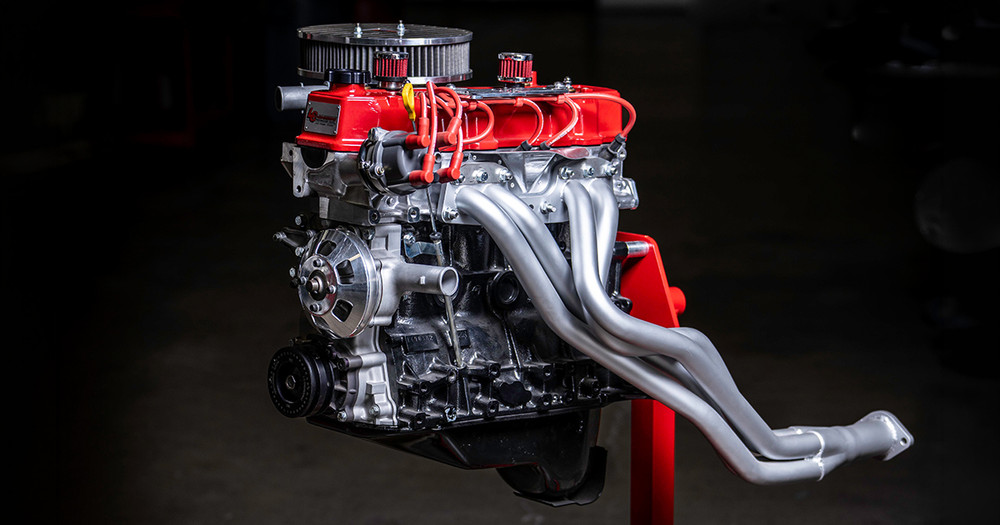
The Toyota 22R and 22RE are the engines that built the modern reputation of the Toyota truck. Produced from 1981 to 1995, the 2.4-liter inline-four powered the Toyota Pickup, the 4Runner, and a generation of Celica coupes, and earned a reputation for crossing 300,000 miles with nothing more than oil changes, timing chains, and the occasional valve adjustment. To the people who own them, run them, and modify them, the 22R family is not a vintage engine — it is a working engine, still in service, still rebuildable, still respected.
This guide covers the full history of the 22R and 22RE: the variants Toyota produced, the differences between them, the vehicles they powered, and what each year really represented. It is written for the owners, builders, and restorers who need accurate information to source the right engine, the right parts, and the right rebuild path. Where the existing internet record is sloppy or contradictory, we have corrected it.
LC Engineering has built, dyno-tested, and raced 22R and 22RE engines since 1985 — longer than most owners have had their trucks. Everything that follows is documented from four decades of production-engine teardown and rebuild work.
LC Engineering Pro Tip: The single biggest source of confusion about these engines is the difference between the 22R (carbureted) and the 22RE (fuel-injected). They share a block and a head family, but the fuel system, the wiring, and the parts availability are different. Identify what you have before you order parts.
Year-by-Year History of the 22R and 22RE
The 22R replaced the 2.2-liter 20R in 1981. Toyota increased the bore and stroke to produce a 2.4-liter (2,366 cc) inline-four with a SOHC eight-valve head, hemispherical combustion chambers, and a forged steel crankshaft. The early 22R was carbureted and used a points-and-coil ignition through 1983, transitioning to electronic ignition shortly after. Fuel injection arrived in 1983 on the 22RE as a high-spec option, and the turbocharged 22RTE was offered as a low-volume performance variant from 1986 through 1988.
1981: The 22R Debuts
Toyota introduces the 22R as the successor to the 20R, powering the 1981 Toyota Celica and the Toyota Pickup. It is a 2.4-liter SOHC carbureted inline-four producing 97 horsepower and 129 lb-ft of torque. The block deck height and head bolt pattern carry over from the 20R, but the bore is enlarged and the head receives revised combustion chambers.
1983: The 22RE (Fuel Injection) Arrives
Toyota introduces the 22RE as a fuel-injected variant alongside the carbureted 22R. The 22RE uses a multi-port electronic fuel injection system with an air-flow meter and a closed-loop oxygen sensor, raising output to approximately 105 horsepower and 137 lb-ft of torque. The carbureted 22R remains in production through 1995 in trucks not equipped with EFI.
1985: The 'Laser Block' Revision
In 1985, Toyota releases the second-generation 22R block, commonly called the 'Laser Block' for the laser-etched cylinder bores. The 1985-and-later block has a slightly different deck height and head bolt geometry than the 1981 through 1984 'early' block, and the parts are not directly interchangeable in every application. The 22RE simultaneously moves to a more sophisticated engine management system with improved cold-start behavior.
LC Engineering Pro Tip: When ordering rebuild parts, head gaskets, or pistons for a 22R or 22RE, you must specify '81-'84 or '85-up. The block deck height and head bolt pattern are different. Mixing parts across the boundary is a common rebuild mistake.
1986–1988: The 22RTE (Factory Turbo)
Toyota offers a factory-turbocharged version of the 22RE, designated 22RTE, in the Toyota Pickup and 4Runner from 1986 through 1988. The 22RTE uses a CT20 turbocharger, an air-to-water intercooler, and a lower 7.5:1 compression ratio. Output is 135 horsepower and 173 lb-ft of torque. Production volume was low — under 30,000 units across the three-year run — making the 22RTE one of the most collectible factory Toyota four-cylinders ever offered.
1989–1994: Refinement and Reputation
During the late production years, Toyota continues to refine the 22RE — revised injectors, updated ignition timing maps, improved cooling system components. By the early 1990s, the 22RE has earned its reputation as the engine that does not quit. Customer Pickups and 4Runners log 200,000 and 300,000 miles on factory bottom ends.
1995: End of Production
U.S. production of the 22R and 22RE ends in 1995. The Toyota Pickup is replaced by the Tacoma, which uses the 2RZ-FE and 3RZ-FE families starting in 1995. The 22R continues in production for export markets through 1997 in some applications. In the United States, the 22R/22RE platform's reputation remains strong enough that LC Engineering still builds new long blocks, crate engines, and high-performance variants of the 22R and 22RE more than 30 years after the last factory engine left Toyota's assembly line.
Toyota 22R, 22RE, and 22RTE Specifications
The 22R family shares the same basic architecture across variants. The table below summarizes the factory specifications for each. All three engines use the same forged-steel crankshaft, the same cast-iron block (with minor revisions across years), and the same SOHC eight-valve aluminum head family.
| Specification | 22R (carb) | 22RE (EFI) | 22RTE (turbo EFI) |
|---|---|---|---|
| Production years | 1981–1995 | 1983–1995 | 1986–1988 |
| Displacement | 2.4 L (2,366 cc) | 2.4 L (2,366 cc) | 2.4 L (2,366 cc) |
| Bore × stroke | 92 × 89 mm | 92 × 89 mm | 92 × 89 mm |
| Compression ratio | 9.0:1 | 9.0:1 | 7.5:1 |
| Fuel system | 2-bbl Aisan carburetor | Multi-port EFI | Multi-port EFI + CT20 turbo |
| Peak horsepower | 97 hp @ 4,800 rpm | 105–116 hp @ 4,800 rpm | 135 hp @ 4,800 rpm |
| Peak torque | 129 lb-ft @ 2,800 rpm | 133–140 lb-ft @ 2,800 rpm | 173 lb-ft @ 2,800 rpm |
| Redline | 5,500 rpm | 5,500 rpm | 5,500 rpm |
| Engine weight | ~370 lb | ~380 lb | ~410 lb (with turbo) |
Vehicles That Used the 22R and 22RE Engines
The 22R family powered three major Toyota platforms in the U.S. market: the Toyota Pickup, the Toyota 4Runner, and the second-generation Toyota Celica. Knowing which engine came in which vehicle is the first step in sourcing the right parts.
Toyota Pickup (1981–1995)
The Toyota Pickup — known as the Hilux in export markets — used the 22R from 1981 forward and the 22RE from 1985 forward. Carbureted 22R Pickups remained in production through 1995 in entry-trim configurations. The 1986–1988 22RTE turbocharged Pickup is the rarest factory configuration. The 1985–1995 Pickup is the platform most commonly associated with the 22RE's million-mile reputation.
Toyota 4Runner (First Generation, 1984–1989)
The first-generation Toyota 4Runner used the 22R and 22RE from launch in 1984 through the end of first-generation production in 1989. The first-gen 4Runner shares its frame, cab, and front sheetmetal with the Pickup — the 4Runner is, in effect, a Pickup with a removable fiberglass top and rear bench seat. The 22RE-powered first-gen 4Runner is among the most desired vintage Toyota SUVs in the current market.
Toyota 4Runner (Second Generation, 1990–1995)
The second-generation 4Runner (1990–1995) continued with the 22RE as the four-cylinder option alongside the new 3.0-liter 3VZ-E V6. The second-generation body is taller and more SUV-oriented than the first-generation, but the drivetrain remained the same proven 22RE that powered the original.
Toyota Celica (Second Generation, 1981–1985)
The 1981–1985 Toyota Celica GT, a rear-wheel-drive sport coupe, used the 22R as its standard powerplant. The Celica was the more car-focused application — performance-oriented, with the same engine running at lower load. Celica 22Rs from this era are still common in the enthusiast market.
Why the 22R and 22RE Earned a Million-Mile Reputation
Reliability does not happen by accident. The 22R family was engineered conservatively for an era when fuel was cheap and refinement mattered less than durability. A handful of specific engineering choices explain why these engines outlast most modern equivalents.
Forged Steel Crankshaft
Every 22R, 22RE, and 22RTE engine left the factory with a forged steel crankshaft — not a cast crank, not a billet, but a properly forged crank with full hardness and fatigue properties. Forged cranks tolerate the cyclical loading of high-mileage operation without developing the microscopic surface cracks that eventually cause cast-crank failures.
Cast-Iron Block, Aluminum Head
The 22R uses a cast-iron block paired with an aluminum SOHC cylinder head. The cast-iron block is central to the engine's durability: it tolerates overheating events and the dimensional stress of repeated heat cycles without warping, and a properly rebuilt 22R block can be machined and run through three or four rebuilds — something rarely true of modern aluminum-block engines. The aluminum head keeps weight down and sheds heat efficiently; it is a serviceable, fully rebuildable casting that holds up across the life of the engine with proper cooling-system maintenance.
Conservative Power Output
At 97 to 116 horsepower from 2.4 liters, the 22R and 22RE were never pushed close to their structural limits in factory tune. The engine was designed to make peak power at 4,800 rpm and redline at 5,500 — well within the safe limits of the forged rotating assembly. Conservative output is one of the most under-credited reliability factors of the 22R family.
Simple Engine Management
The 22RE's electronic fuel injection system is mechanically straightforward — air flow meter, cold start injector, throttle position sensor, oxygen sensor, and a comparatively simple ECU. There are fewer sensors to fail, fewer wiring harnesses to degrade, and fewer firmware-related issues than modern engines. Most 22RE driveability problems can be diagnosed with a multimeter and a fuel pressure gauge.
Timing Chain (Not a Belt)
The 22R uses a timing chain, not a timing belt. The chain is double-row and is driven by a forged crank sprocket. With reasonable maintenance, the chain lasts 100,000 to 150,000 miles before stretch becomes a problem. When the chain does need replacement, the parts are inexpensive and the procedure is well-documented.
Buying, Replacing, or Rebuilding a 22R or 22RE Today
More than 30 years after the end of production, the 22R and 22RE engines remain among the most-rebuilt and most-sourced four-cylinder engines in the Toyota community. There are three primary paths to a working 22R or 22RE in 2026: a used factory engine, a remanufactured replacement, or a built crate engine.
Used Factory Engines
A clean used 22RE from a low-mileage donor truck is still the lowest-cost option — but the supply has thinned considerably. Most low-mileage donors are 30+ years old, and condition varies dramatically. Expect to pay between $800 and $2,500 for a used long block depending on condition and seller, with a compression test and leak-down test as conditions of sale.
Remanufactured Long Blocks
Reman engines from major aftermarket builders are widely available. Quality varies. Look for builders who disclose machining specs, the source of internal components, and a documented break-in procedure. A good reman 22RE is a reasonable choice for an OEM-spec rebuild — the LCE 22R/RE All-New Street Long Block is built to exactly that standard, with new internal components, modern machining, and dyno validation before it ships.
LCE Stroker and Crate Engines
For a 22R or 22RE owner who plans to keep the truck for the long term, an LCE-built stroker long block is the highest-value option. The 22R/RE 4WD (85-95) Stroker Long Block uses a stroked crankshaft to increase displacement to 2.7 liters, raising peak torque and horsepower significantly above factory output while retaining the OEM reliability characteristics. LCE also offers the 22R/RE Stage 3 Pro Stroker Long Block for performance-oriented builds and the 22R/22RE 2WD (85-95) Stroker Long Block for two-wheel-drive applications. Each LCE long block is built to documented specifications and dyno-validated before it ships.
Frequently Asked Questions About the Toyota 22R and 22RE
What years did Toyota produce the 22R and 22RE engines?
Toyota produced the 22R from 1981 through 1995 in the U.S. market. The fuel-injected 22RE entered production in 1983 and ran through 1995. The turbocharged 22RTE was produced from 1986 through 1988. Some export markets continued the 22R through 1997.
What is the difference between the 22R and 22RE?
The 22R is carbureted (Aisan two-barrel) and produces approximately 97 horsepower. The 22RE uses multi-port electronic fuel injection and produces 105 to 116 horsepower depending on the year. Both engines share the same 2.4-liter block, forged-steel crankshaft, and aluminum cylinder head. The 22RE is more fuel-efficient and has better cold-start behavior; the 22R is mechanically simpler to maintain in older trucks.
Are the 1981 to 1984 22R and the 1985 to 1995 22R interchangeable?
Not directly. In 1985 Toyota revised the 22R block (commonly called the 'Laser Block') with a slightly different deck height and revised head bolt pattern. Head gaskets, pistons, and certain internal components are not directly interchangeable between the early and late blocks. When ordering rebuild parts, always specify whether your engine is pre-1985 or 1985-and-later.
How much horsepower does a stock 22RE make?
A factory 22RE produces approximately 116 horsepower at the crankshaft and 140 lb-ft of torque in its later-production configuration. Early 22RE production (1983–1985) was rated lower, at approximately 105 horsepower. At the wheels of a four-wheel-drive Toyota Pickup, expect 90 to 95 horsepower after drivetrain losses.
Is the 22RE a reliable engine?
The 22RE is among the most reliable production four-cylinder engines ever built. Well-maintained 22REs routinely exceed 250,000 miles on the factory bottom end. Common reliability factors include the forged steel crankshaft, cast-iron block, conservative factory power output (well within the engine's structural limits), simple engine management, and a timing chain (not a timing belt). Regular oil changes and periodic valve adjustment are the primary maintenance items.
What is the 22RTE and how rare is it?
The 22RTE is the factory-turbocharged variant of the 22RE, produced from 1986 through 1988 for the Toyota Pickup and 4Runner. It uses a CT20 turbocharger, a lower 7.5:1 compression ratio, and an air-to-water intercooler, producing 135 horsepower and 173 lb-ft of torque. Total production was under 30,000 units across the three-year run, making it one of the most collectible factory four-cylinder Toyotas in the U.S. market.
Can I still buy a new 22R or 22RE engine in 2026?
Toyota no longer manufactures the 22R or 22RE, but LC Engineering builds new long blocks and crate engines for the 22R and 22RE platforms — built on remanufactured blocks with new internal components, modern machining, and dyno validation. LCE offers OEM-spec replacement long blocks, stroker long blocks (2.7-liter displacement increase), and Stage 3 Pro Stroker performance engines.
What is the most common 22RE failure point?
On a well-maintained 22RE, the most common high-mileage failure points are the timing chain (stretches around 150,000 miles), the head gasket (especially after overheating events), and the lower timing chain guide. None of these are catastrophic failures — each can be addressed during a normal service interval. Truly catastrophic engine failures on a stock 22RE are rare in the absence of significant abuse or neglect.
How does a stroker 22RE compare to a stock 22RE?
A stroked 22RE — built with a longer-stroke crankshaft to displace 2.7 liters instead of 2.4 — produces meaningfully more torque across the rpm range and approximately 20–30 more peak horsepower than a stock 22RE, with the same reliability characteristics. The LCE 22R/RE Stroker Long Block is the most common upgrade path for owners who want substantially more power without the complexity of forced induction.
Ready to Source or Rebuild Your 22R or 22RE?
LC Engineering has been building 22R and 22RE engines since 1985. We supply complete long blocks, stroker engines, performance parts, and OEM-spec rebuild components for the 22R, 22RE, and 22RTE — including parts no other supplier carries. Whether you are restoring a survivor, building a daily driver, or upgrading to a performance-oriented Stage 3, our team has done it before.
- Browse 22R / 22RE crate engines and long blocks
- Browse 22R / 22RE master rebuild kits
- Browse 22R / 22RE engine performance parts
- Call our tech line: (928) 505-2501
- Email: support@lcengineering.com