The Parts That Fail Quietly
Hoses are the cheapest thing on a 3.4 and the most common reason a good truck is on the back of a recovery vehicle. Rubber hardens, cracks at the ends first, and the failure happens under heat and pressure rather than on a cold driveway where you would notice.
If the truck is over twenty years old and the hoses are original, they are not fine. They are simply not leaking yet.
Heater Hose Kits
HPS reinforced silicone heater hose kits for the 1996-2002 4Runner, in standard and black.
Heater hoses are worth doing as a kit rather than one at a time. They are the same age, they sit in the same heat, and the access is the same whether you change one or all of them. Radiator hose kits are on Cooling.
Air Intake Hoses — Two Year Splits
Toyota changed the 4Runner intake hose partway through, and the split does not line up neatly:
The ranges overlap for 2000 and 2001. If your truck is one of those two years, compare the hose you are taking off rather than ordering on the year alone — or send us a photo and we will tell you which one you have.
A split intake hose is a genuinely underdiagnosed fault: unmetered air after the sensor gives you a rough idle and a lean code, and the crack is usually on the underside where it only opens when the engine rocks.
Ventilation Hose
The OEM ventilation hose No.2 is the crankcase ventilation plumbing for 4Runner and Tacoma. It hardens like everything else, and a collapsed one upsets crankcase pressure in ways that show up as oil where oil should not be.
Power Steering
The Tacoma power steering hose conversion kit is the plumbing side of a steering upgrade rather than a replacement for a leaking factory hose — it goes with an upgraded pump, usually alongside bigger tyres or a solid axle.
The pump bracket that completes that job is on Motor Mounts & Swap.
Not sure which hose you are looking at? Send us a photo and the year and we will identify it.

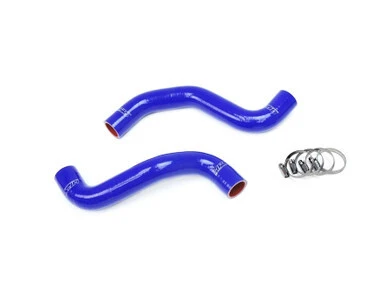
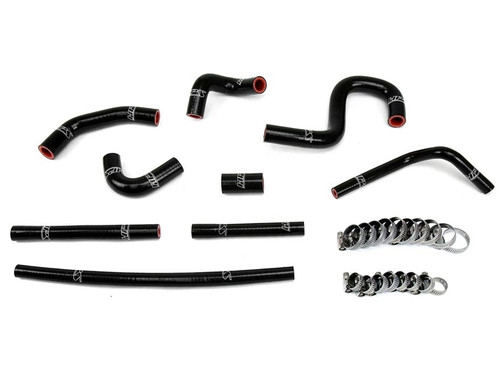 HPS Silicone Heater Hose Kit (Black) This brand new HPS High Temp 3-ply Reinforced Black Silicone Heater Hose Kit for a Toyota, 96-02 4Runner 3.4L V6 (equipped with rear heater), is designed to...$208.00