First: Distributor or Waste Spark?
The 3RZ changed ignition systems partway through production, and almost every part on this page depends on which one you have:
- 1995-1997 — distributor. A conventional cap and rotor distributing spark to four plugs.
- 1998-2000 onward — coil pack, waste spark. No distributor, no cap, no rotor.
Open the bonnet and look for a distributor on the head. Thirty seconds now saves ordering the wrong tune-up kit.
Tune-Up Kits — the Efficient Way to Do This
Ignition parts wear together, and replacing them one at a time means chasing the same misfire three times. These kits pair components that are designed to work with each other.
Pro Tune-Up Kits
The comprehensive ignition overhaul, built around our Magnecor wire sets:
Street Tune-Up Kits
The sensible maintenance choice for a daily driver, built on NGK components rather than competition cable: the Street Tune-Up Kit and the waste spark version.
Which to buy? If the truck is stock and you want it running right, the Street kit is genuinely enough. The Pro kit earns its money on a modified engine, under boost, or where wire routing runs close to header heat.
Why the Pro Wires Cost What They Do
Our Pro sets use Magnecor KV85 competition 8.5mm cable, and the construction is worth understanding because it is not marketing.
The conductor is a 2.5mm high-capacity metallic inductance EMI-suppressed core — stainless steel wire wound at 200 turns per inch over a ferromagnetic core. That construction carries spark energy with very low resistance while suppressing the electromagnetic interference that upsets an ECU and a radio.
That matters more on a modern fuel-injected engine than on an old carburetted one. Cheap high-performance wires with a low-resistance core can throw enough interference to confuse the engine management, which produces faults nobody can trace.
Three versions: 1995-1997 distributor, 1998-2000 coil pack, and a cut-to-length set with HEI ends for LC Pro Fuel installations.
NGK sets are also available for early and later applications.
Distributor Components
For 1995-1997 trucks: the complete distributor, the street distributor cap, the rotor and the cap O-ring.
Replace the cap and rotor together. A new rotor running in a worn cap simply moves the problem, and both are cheap. The O-ring is what keeps moisture out — a cheap part that causes expensive-feeling misfires when it fails.
Spark Plug Tube Seals — the Leak That Looks Like Something Worse
The spark plug tube seals are worth calling out.
When they harden, oil from the cam area fills the spark plug wells and sits around the plug and the boot. The symptom is a misfire that comes and goes, and people replace plugs, wires and coils chasing it. If you pull a plug and the well is full of oil, this is your problem.
The wire clip keeps the leads routed away from heat, and the distributor plug blanks the housing on engines converted away from a distributor.
Charging
The high output alternator is the right upgrade once you have added load the factory unit was never sized for — a winch, a light bar, a compressor, or electric fans. The usual sign is voltage that sags at idle with everything switched on.
Sensors
The throttle position sensor is on the Intake & Throttle Body page, since it lives on the throttle body — and remember it needs a critical adjustment procedure, not just bolting on.
Chasing a Misfire? Try This Order
- Pull a plug and look in the well. Oil means tube seals, not ignition.
- Plugs and wires — and if the wires are unknown age, do them as a set.
- Cap and rotor if you have a distributor. Together.
- Coil pack if you have waste spark.
- Then fuel — see Fuel Injection. Measure pressure before replacing anything.
Not sure which system your truck has, or what is causing a misfire? Send us the year and the symptoms and we will work it through with you.

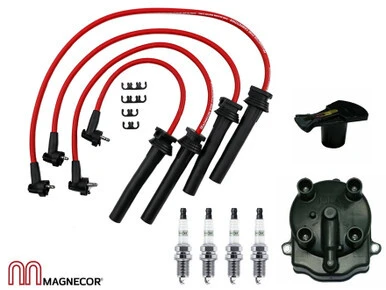
 "Ultimate" Ignition Tune-Up Kit Elevate your engine's reliability and ignition efficiency with the LC Engineering Pro Tune-Up Kit. Specifically curated for the "waste-spark" ignition systems found on...$272.69
 "Ultimate" Ignition Tune-Up Kit Restore peak performance and reliability to your early model Toyota 2.4L or 2.7L engine with the LC Engineering Pro Tune-Up Kit. Specifically designed for the...$227.24
 2RZ/3RZ Distributor Need to replace your distributor? LCE has you covered with many OE components like this one to get you back on the road. Contact our Tech Support Line for further...$224.89