
There are no products listed under this category.
-
fast shipping
Speed Delivery
There are no products listed under this category.
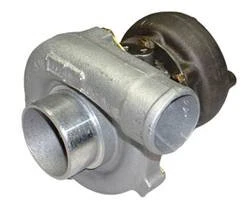
Both Pro Turbo kits are complete, and both are the result of testing a lot of turbochargers and manifold designs rather than picking parts from a catalogue.
The difference is not the hardware quality — it is how much cylinder pressure your engine can live with. A stock-compression 3RZ belongs on the low boost kit. The high boost kit assumes an engine built for it — lower compression pistons, the right valve train, and fuelling to match.
Putting high boost on a stock engine is the most expensive mistake available on this page.
This is worth reading properly, because it is counter-intuitive and it is the kind of thing you only learn by warrantying parts.
A tubular header makes more power on a turbo engine. That is why it is the obvious choice, and for a race truck it is the right one.
But a daily driven turbo engine will destroy one. The extreme exhaust temperature a turbo produces, combined with the long sustained loads of road driving, breaks tubular headers down over time. It is not a manufacturing problem; it is what happens to thin-wall tube under that duty cycle.
So our recommendation is deliberately split: tubular for race and extreme use only. For anything that gets driven on the road, use the cast manifold. We would rather you had a turbo kit that survives than one that reads better on paper.
The 2RZ/3RZ CNC turbo manifold was originally designed by Steed Speed Performance, and LC Engineering now manufactures it.
It is cut from solid steel billet rather than cast or fabricated, which is why it can be both strong and light. Machining it from solid also means the exhaust passage is exactly the shape it was designed to be in CAD — large passages, a smooth sweep up into the turbo and down into the wastegate outlet, which is what gives fast spool. The wastegate outlet is a V-band flange for a 40mm wastegate.
A turbo engine wants a different camshaft profile to a naturally aspirated one, and we grind two specifically for it. Pick by boost pressure, not by stage number.
The naturally aspirated Stage 1 to Stage 5 grinds are on the Camshafts page.
Boost puts heat into the exhaust valve that a naturally aspirated engine never sees, and the factory valve is not built for it.
The 2RZ/3RZ Turbo Valve Train Kit exists for exactly that:
The full valve train range, including the naturally aspirated and Stage 5 kits, is on the Cylinder Heads & Valvetrain page.
The Pro 96mm turbo piston ring set (+.040") uses gas nitride rings, developed originally for boosted engines.
The useful part is what that material allows: because the nitride ring seals reliably at a smaller cross-section, we can run a thinner ring — which cuts the friction that a thicker ring costs you in horsepower, without giving up sealing. All of our forged pistons now come with these as standard.
A turbocharger fails from oil supply and oil drainage far more often than from anything internal. Both lines are stainless braided:
Turbocharging a 3RZ properly is a systems job rather than a parts list. Tell us the truck, the target and the fuel you will run and we will spec it end to end.