Pick the Cam for the Truck You Actually Drive
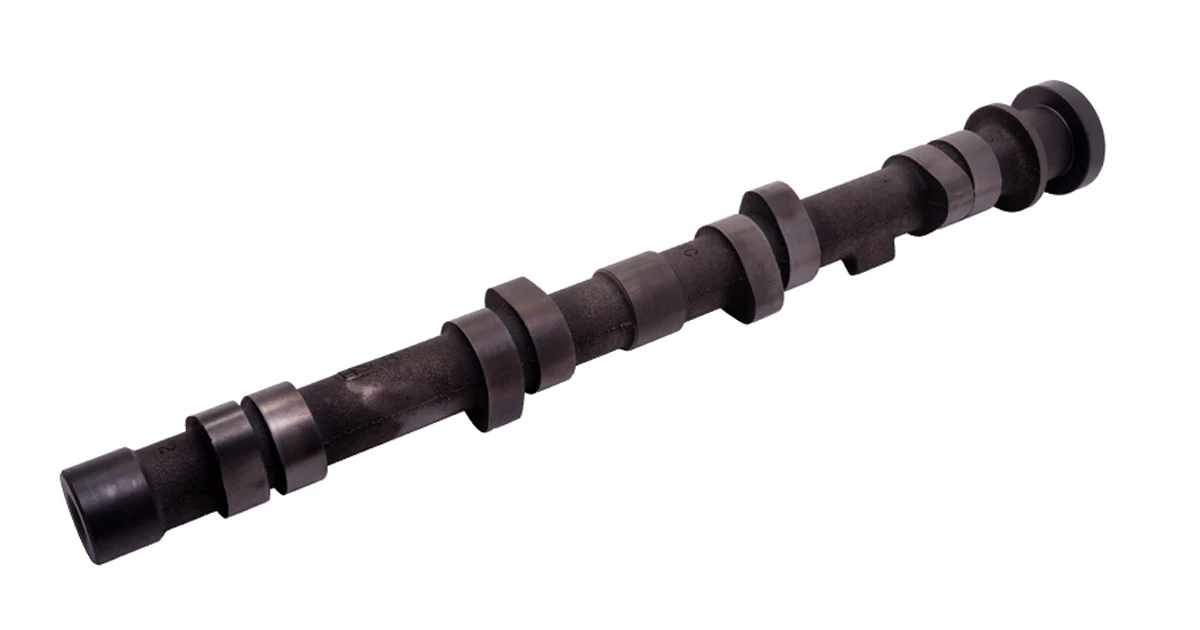
We grind these ourselves and we have been testing them on the street, on the dyno and on the track since 1985. The mistake we see most often is not buying too little cam — it is buying too much. A big cam in a street truck gives away the low-end torque you use every day in exchange for power at an rpm you never visit.
Work down this list to the first one that matches how the truck is used, and stop there.
Street and mild — keeps the factory valvetrain
Street / EFI Pro — the mild upgrade. Works with the stock Aisin carburetor, a Weber 32/36, or factory Toyota fuel injection, and is designed around the factory valve train components.
Pro Torquer — an excellent upgrade to any mild engine, carbureted or factory EFI, and again designed to work with the factory valve train, so no springs or retainers to buy.
These two are the ones to choose if the truck is a daily driver and you want more without opening the head.
Street performance and trail
Stage 2 — excellent mid-range power to around 6,000 rpm. A broad midrange that suits anything from a daily driver up to a rock crawler or a mild race engine. This is our most popular cam and, for most people, the right one.
Stage 3 Torquer — if the truck crawls or runs large tires, read this one twice. It makes torque from as low as 1,500 rpm and holds a broad, flat curve to almost 5,000. For rock crawling and rock racing this is a better answer than a bigger number.
Stage 3 — moves the band to 2,500-6,000 rpm and expects larger valves, port work and an upgraded carburetor or EFI system. This is the biggest cam we recommend for a street application.
Race
Stage 4 — strong upper rpm power with real torque still in the 3,000-5,000 range. Circle track, drag and road racing.
Stage 5 — a race grind for high-rpm naturally aspirated engines running larger valves and aggressive port work.
Outlaw — .527" lift, the biggest cam LC Engineering makes. Full race, oversized valves, a highly modified head, and it will carry a 22R race engine to 8,000 rpm. This is not a street cam and we will tell you so if you ask.
Boosted — choose by boost level, not by stage number
Turbo cams are a different grind, not a bigger one. Match the cam to the boost:
- Street Turbo — 6 to 10 psi. Works with all the stock valvetrain and requires no other modifications, which makes it the easiest real gain on a low-boost 22RTE.
- Pro Turbo — 10 psi and above. Engineered to optimise exhaust flow and drive the turbo harder, so it spools faster with less lag. Lift is over .450", so at this boost level we recommend the dual spring setup.
The Part of This That Breaks Engines
Once you step up to a Stage 2 or higher cam, the stock Toyota valve train is not designed to handle it. That is not a sales line, it is a geometry problem: with high lift and long duration the rocker arms begin to interfere with the retainers, the retainers start running into the stock guides, and the result is broken parts — usually at the worst moment and usually taking other things with them.
That is what the Pro Camshaft Kits exist for. They pair the correct springs, retainers and hardware with the cam so the valvetrain can actually follow it:
Pro Camshaft Kit with titanium retainers · Pro Camshaft Kit with chromoly retainers
Titanium is lighter and the choice for sustained high rpm; chromoly is the more economical option and plenty for a street or trail engine. Either way, budget for the kit at the same time as the cam, not later. The Stage 4, Stage 5 and Outlaw grinds require it outright.
Degreeing — Do Not Skip It
A camshaft installed "dot to dot" is not a degreed camshaft. Manufacturing tolerance in the chain, the sprockets and the keyway stack up, and a cam that is a couple of degrees out gives away exactly the power you just paid for.
The Camshaft Alignment & Degreeing Tool Kit is built specifically for the 20R, 22R, 22RE and 22RTE, which is what makes it quicker than a generic degree wheel. If you have not done it before, our walkthrough is here: degreeing in your camshaft.
Worth reading before you order: what to consider when replacing your cams.
Small Parts That Go With the Job
The OEM camshaft cap and timing cover locator ring dowel — precision alignment for mated surfaces, and the kind of three dollar part that holds up an engine build. And the OEM crankshaft main and camshaft bolt kit: in a neat piece of factory engineering Toyota used the same high-strength bolt for the main bearing caps and the camshaft, so one part number covers both.
Still Not Sure?
Tell us the compression ratio, the head, the fuel system, the transmission, the tyre size and how the truck actually gets used, and we will tell you which cam we would fit. Ask us — it costs nothing and it is a great deal cheaper than the wrong camshaft.

 OEM Crankshaft Main & Camshaft Bolt This is a brand new, genuine OEM Toyota factory replacement bolt. In a unique piece of factory engineering, Toyota uses this exact same high-strength bolt for two...$8.60
 LCE OEM Camshaft & Timing Cover Locator Ring Dowel Precision alignment is non-negotiable when it comes to the critical tolerances of your Toyota's top end and timing assembly. The LCE OEM Camshaft...$3.10