A V6 Has Two Sides, and the Exhaust Reflects It
The practical consequence shows up the moment you order gaskets. The exhaust gasket set is sold as a left hand and right hand pair because the engine needs both. Ordering one and finding out on the driveway is a wasted Saturday.
The Header
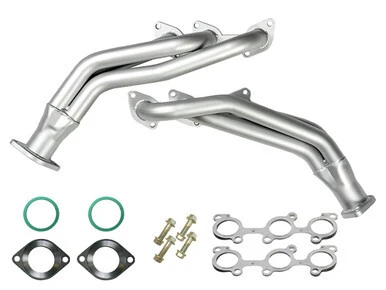
The LCE 5VZ header covers two jobs: a performance header for a Tacoma or 4Runner that came with the 3.4, and the header for putting a newer 5VZ into an older Pickup or 4Runner, where nothing off the shelf fits.
If you are swapping a 3.4 into an older chassis, this is the part people forget to budget for. The engine mounts get the V6 in; the exhaust is what stops the project halfway. Swap mounts are on Motor Mounts & Swap.
JBA header kits
Four JBA kits are also listed, for Tacomas without EGR. They split by year and then by finish:
Check for EGR before you order. These kits are listed for trucks without it, and that is the fitment question that decides whether the part bolts up — not the year on its own.
Ceramic and stainless are a finish choice rather than a power one. Ceramic keeps more heat inside the tube and out of the engine bay; stainless is bare metal that will colour with heat.
Cat-Back Systems
Five bolt-on cat-back systems, all stainless and all mandrel bent:
One fitment trap on the Tundra system. It is listed to fit 2000-2003 extended cab trucks with the 76.5" bed only. The year range on the title is wider than the cab and bed combination it actually suits, so check what you have before ordering.
What a cat-back does and does not do. It changes the sound and removes restriction behind the converter. On a naturally aspirated 3.4 the power it returns is modest, and most people buy one for the tone. If the engine is supercharged, the exhaust side matters more — a blower makes more gas to move.
Catalytic Converters — Read the Year and the State
This is where the 5VZ gets fiddly, and getting it wrong means failing a test you have already paid for.
That last one catches people out. The 1999-2002 4Runner runs a second converter downstream, and replacing only the first while the second is the failed one gets you a second bill. If the code points at catalyst efficiency, work out which converter it is naming before you buy anything.
Studs and Hardware
Manifold studs corrode and snap, and a snapped one turns a two-hour job into a machine shop visit. The header stud set covers the job, and the OEM exhaust manifold stud is sold individually for replacing the one that let go.
Count before you order, because the V6 is not the same as the four-cylinder here. A 20R, 22R, 22RE, 2RZ or 3RZ uses eight studs and eight nuts. The 5VZ and 3VZ use twelve of each. Buying a four-cylinder quantity is the commonest way to end up four short with the manifolds off.
Sold individually: the stud and nut together, and the OEM mechanical lock nut on its own (M10 x 1.25). The lock nut uses a distorted thread rather than a nylon insert, so it holds its torque through heat cycles that would melt a nylon lock nut out.
Fit new studs whenever the manifolds come off. They are cheap, you already have the access, and an old stud that survived removal is the one that breaks next time.
Not sure which converter your truck needs, or whether the header will clear your chassis? Send us the year, model and where you test and we will confirm it before you order.

 Catalytic Converter (17.5" x 2.5") Freeflow Stainless Steel Catalytic Converter fits OEM or aftermarket exhaust systems. 2-1/2" pipe and flanges make for a direct fit for most applications. It...$381.45