Decide How Far First
Lift height is the decision everything else follows from, and it splits into three honest tiers.
- Up to about 2 inches — leveling. Takes the factory nose-down stance out of a truck, clears a slightly bigger tire, and usually needs nothing else. Spacers, strut extensions and add-a-leafs live here.
- 3 to 4 inches — the sweet spot. Real clearance, real tire size, and still a truck you want to drive to work. Above this you start replacing rather than spacing.
- 6 to 12 inches — the build. New arms, new geometry, driveline work, and a truck that has changed character. Worth doing, but go in knowing.
Two other things decide which kit fits before anything else does: 2WD or 4WD, and on the 2005–2015 Tacoma, 5-lug or 6-lug. Both change the part number.
One thing worth knowing before you shop: a lift is springs and a lift is shocks, and they are two separate decisions. A spacer or a spring set sets the ride height; the shock decides what the truck feels like once it is up there. Plenty of kits here include shocks and plenty do not — check before you assume, and see the Elka section below if you are buying the two separately.
Bulletproof Suspension — the 10 to 12 Inch Kits
The tallest kits we sell, and the ones people come looking for by name.
At this height the truck is a different vehicle. Budget for driveline angles, brake lines and an alignment you cannot do at home, and expect to be gearing for the tire you are about to fit.
Pro Comp — Lift and Leveling
The middle of the range, and where most people should be looking.
- Tundra: 4" lift, 2007-2020, 4" lift with ES9000 shocks, 2007-2015, Nitro 3" lift, 2007-2015
- Tacoma: 6" lift with ES9000 shocks, 2012-2015 and the Nitro 2.75" for 5-lug 2WD
- Leveling: 2.5" Tundra 2007-2015, 2.5" Tundra 2000-2006, 3" Tundra 2000-2006, 2" Tacoma 1996-2004
- Shocks for the older trucks: Pro-X rear shock, 0-1" lift, 1986-1995 Pickup / 4Runner and the 2-3" lift version
Elka — Shocks Built for a Specific Lift Height
Elka is the largest single line in this category, and it works differently from the kits above. Rather than one shock that tolerates a range, Elka builds them valved for the lift height you are running — so you choose the height band first, then the model and the series.
Pick the height band. 0–1" and 0–2" are for a stock or levelled truck. 2–3" is for a truck already on a lift kit. Fitting a 0–2" shock to a 3" lift gives you a shock running out of travel, which is the single most common mistake made on this page.
Then pick the series. Three of them, and the difference is real:
- 2.0 IFP — 2-inch body, internal floating piston. The daily-driver option. Better than factory in every way that matters and priced to be an easy yes.
- 2.5 IFP — bigger body, more oil, more heat capacity. Worth it if the truck is loaded, towing, or seeing washboard road at speed.
- 2.5 DC Reservoir — 2.5-inch body with a remote reservoir and dual compression adjustment. This is the one for people who actually drive their truck hard off-road, and the only one you can tune at the trailhead.
Coverage runs across 1996-2002, 2003-2009 and 2010-2024 4Runner, 2005-2023 and 2024-present Tacoma, 2000-2006, 2007-2021 and 2022-2025 Tundra, FJ Cruiser and Sequoia. Front, rear, and front-and-rear kits.
The full line is on the Elka brand page. If you are not sure which band you are in, measure the truck as it sits now rather than adding up what the box said.
ReadyLift — SST Kits and Leveling
ReadyLift's SST kits lift the front and the rear together, which keeps the truck sitting level rather than nose-high.
- Tundra: SST 3" front / 1" rear, 2007-2013, SST 3.0"/2.0" (TRD-compatible), SST 4.0"/2.0", 3" prerunner-look front kit
- Tacoma: 2.0" kit, 1995.5-2004 6-lug, SST 3"/1" Prerunner 2005-2015, SST 2.75"/1.75" for 5-lug 2WD
- FJ Cruiser and 4Runner: SST 3" kit, 2003-2013
- Sequoia: SST 2.5"/1.5", 2001-2007 and the 3" kit for 2008-2016
- Leveling and blocks: Tundra 2-4" front leveling, Tundra 3" front leveling 1999-2006, T6 billet 2.25" Tacoma Prerunner, 2" rear block kit, 6-lug Tacoma / Tundra
- Supporting parts: Tacoma mid-travel uniball upper control arms, Tundra uniball upper control arms and the sway bar relocation bracket
Toytec — the 1986-1995 Pickup and 4Runner
The old trucks are torsion bar at the front and leaf at the rear, so lifting them is a different job from lifting a Tacoma. Toytec's kits are built for exactly that.
Rear Lift Kits We Build Ourselves
These are ours, made here, and they are the reason a lot of people find this page. Rear lift on a leaf-sprung Toyota is the half of the job the brand kits often skip.
Lifted Leaf Spring Sets — Also Ours
A block or an add-a-leaf raises a truck. A new spring pack raises it and gives it back the ride and the load capacity it had when it was new — which on a forty-year-old truck is usually the real problem. We build these in +2", +3" and +4", front and rear.
- 1979–1983 4WD Pickup / Hilux — rear sets in +2", +3" and +4"
- 1984–1988 4WD Pickup / Hilux — rear sets in +2", +3" and +4"
- 1989–1994 4WD Pickup / Hilux — rear sets in +3" and +4", plus a heavy-duty +2"
- 1979–1985 4WD Pickup — front sets in +2", +3" and +4"
- 1984–1989 4Runner — rear sets in +2", +3" and +4"; 1984–1985 4Runner front sets in the same three heights
For a lot of articulation rather than a lot of height, the Extra-Flex extended springs are the other route — longer packs in 3", 4" and 5" for 1975–1995, front and rear. They need matching shackles and hangers, which are listed alongside them.
Both families are in the grid above. If you are replacing springs rather than spacing, say so when you call — spring rate and load are worth a conversation and a catalogue page cannot have it for you.
2WD Trucks
Two-wheel-drive Toyotas get overlooked, and they are a real part of what we sell. The 2WD 3.5" lift kit with shocks for the 1984-1995 Pickup is the one people ask for by year — it fits the whole run.
On the later trucks, look at the Pro Comp Nitro 2.75" for the 5-lug 2WD Tacoma and the ReadyLift 2.25" Prerunner leveling kit.
What a Lift Actually Changes
Four things people find out afterwards, in the order they usually find them out.
- Gearing. A bigger tire re-gears the truck the wrong way. Two inches of tire on a stock-geared 22R turns a truck that pulled fine into one that does not.
- CV and driveline angles. On an IFS truck, lifting drops the front differential out of alignment with the axles. That is what a differential drop spacer is for — it lowers the diff back down relative to the frame. It is not a lowering part, despite the name.
- Alignment, every time. Not optional and not once. A lifted truck that has never been aligned eats front tires.
- Brake lines and bump stops. Past about four inches the factory lines run out of length before the suspension runs out of travel.
- Shock length. The factory shock is valved and sized for the factory ride height. Lift the truck and it either tops out or hangs at full extension, neither of which is doing anything useful. This is what the Elka height bands are for.
Going the other way? See lowering kits. Going much further than a lift will take you? A solid axle swap is the honest answer to wanting a lot of articulation, and the 3-link and 4-link kits live there.
Browse by Truck Instead
If you would rather start from the vehicle: 1978-1983 Pickup, 1983-1988 Pickup, 1989-1995 Pickup, 1984-1989 4Runner, 1990-1995 4Runner, 1996-2002 4Runner, 2003-2009 4Runner, 2010-2024 4Runner, 1995-2004 Tacoma, 2005-2015 Tacoma, 2016-2023 Tacoma, 2024-present Tacoma, 2000-2006 Tundra, 2007-2021 Tundra, 2022-2025 Tundra, 2008-2022 Sequoia and FJ Cruiser.
Not sure how much lift your truck will take, or what it will need afterwards? Tell us the year, the model, 2WD or 4WD, and the tire you want to run. The tire size is the question most people answer last and should answer first.


 The Ultimate Lift: Bulletproof 10-12" Suspension System Elevate your Sequoia to legendary status with the Bulletproof Suspension 10-12 Inch Lift Kit. Engineered to fit both 2WD and 4WD models, this...$7,444.84
 Complete 10-12" Toyota Tacoma Lift Kit (BULLETPROOF) Bulletproof Suspension Inc. has created a 2005-2019 Toyota Tacoma 10-12 Inch lift kit with the best leading design and engineering that can only...$5,992.54
 Toyota Tundra 10-12" Suspension System The Bulletproof 10-12 inch Lift Kit is a premium suspension system engineered to accommodate large-diameter tires while maintaining the structural integrity and...$5,240.64
 2005-2019 Toyota Tacoma 10″-12″ Lift Kit (BULLETPROOF) Searching for the ultimate lift kit system for your 2005+ Toyota Tacoma 10-12 Inch 2wd/4wd? Your search is over! Bulletproof Suspension Inc...$5,240.64
 10-12" Suspension System The Bulletproof 10-12 inch Lift Kit is a high-clearance suspension system engineered for the 4WD Tundra Platform. This Kit provides significant lift while maintaining factory...$4,911.04
 Premium Trail Performance & Everyday Comfort Increase the off-road capabilities while improving the comfort and handling of your Tacoma. This premium 2.5 DC Reservoir shock upgrade delivers a highly...$4,300.00
 Premium Trail Performance & Everyday Comfort | Tacoma 4x4 Maximize your Tacoma's off-road capabilities without sacrificing everyday ride quality. This premium 2.5 Dual-Speed Compression (DC)...$4,300.00
 Premium Trail Performance & Everyday Comfort Increase the off-road capabilities while improving the comfort and handling of your Tundra. This premium 2.5 DC Reservoir shock upgrade delivers a highly...$4,300.00
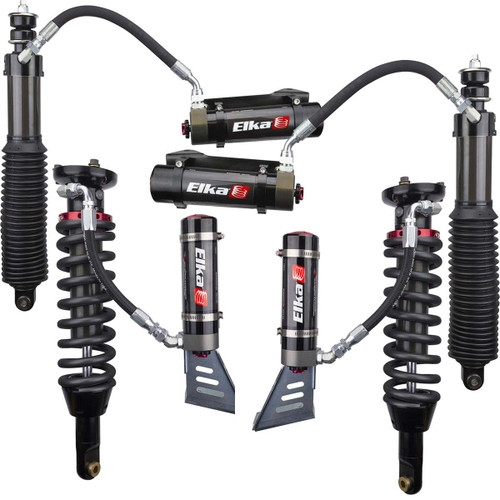 Premium Trail Performance & Everyday Comfort | Tacoma 4x4 Increase the off-road capabilities while improving the comfort and handling of your Tacoma. This premium 2.5 DC Reservoir shock upgrade...$4,300.00
 Premium Trail Performance & Everyday Comfort Increase the off-road capabilities while improving the comfort and handling of your Tundra. This premium 2.5 DC Reservoir shock upgrade delivers a highly...$4,300.00
 Premium Trail Performance & Everyday Comfort Increase the off-road capabilities while improving the comfort and handling of your Tundra. This premium 2.5 DC Reservoir shock upgrade delivers a highly...$4,300.00
 Premium Trail Performance & Everyday Comfort | Tacoma 4x4 Maximize your Tacoma's off-road capabilities without sacrificing everyday ride quality. This premium 2.5 Dual-Speed Compression (DC)...$4,300.00